

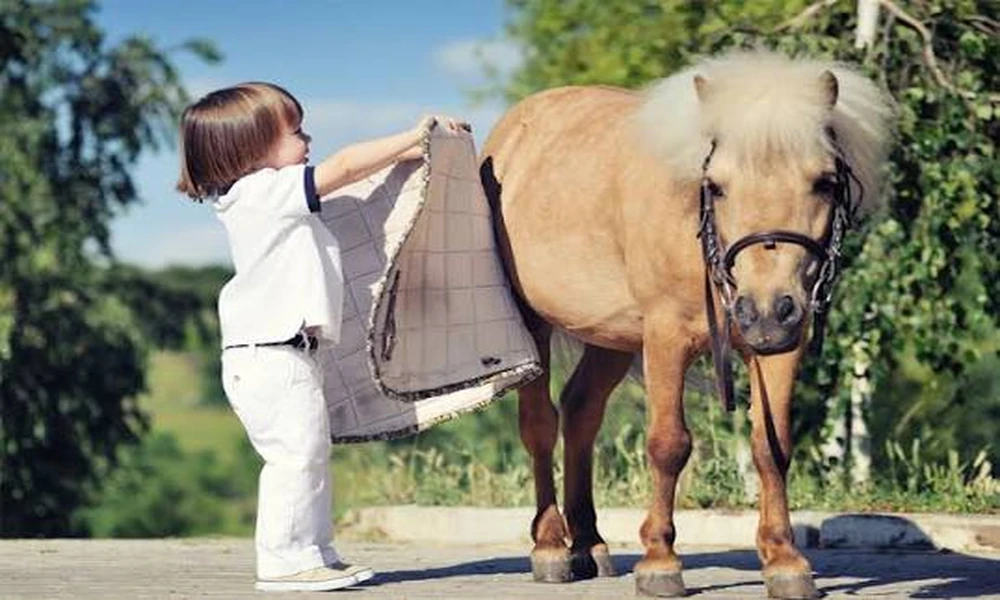
For many children, their first experience in the saddle is on a pony. Ponies are smaller, can feel less intimidating and are often associated with young or beginner riders. However, that doesn’t necessarily mean every child should start on a pony or that moving on to a horse is the inevitable next step.
When choosing between pony riding and horse riding for a child, size is only part of the picture. The animal’s temperament, experience and training matter enormously, as do the child’s age, height, confidence and riding ability.
So, to help you gain more information on the topic, some of the questions we’ll answer below include:
- So, is pony riding better for children?
- When should a child progress to a horse?
- And does that progression always need to happen?
What Is the Difference Between a Pony and a Horse?
The most obvious difference is height. In general, ponies measure no more than 14.2 hands high at the withers, while animals above this height are normally classed as horses. Some breeds are exceptions, but this is a useful starting point.
Ponies also tend to have proportionally shorter legs, thicker necks and sturdier bodies. Horses are generally taller and may have longer strides.
From a child’s perspective, however, the important distinction isn’t simply whether the animal is technically a pony or horse. It is whether the animal is an appropriate match for that particular rider.
A small, calm pony can be ideal for a young beginner, while an experienced teenager may be much more comfortable on a horse. Equally, a quiet, well-trained horse can sometimes be a more suitable choice than a lively or strong pony.
Why Do Children Often Start with Pony Riding?
Ponies are commonly used for children’s early riding experiences because their smaller size can make the whole experience more approachable.
For a child who has never been close to an equine before, standing beside a large horse can initially feel overwhelming. A smaller pony may help them become comfortable with being around the animal before developing skills in the saddle.
Young riders can also benefit from being physically closer to the ground. While all riding involves some risk, sitting on a smaller animal can make those first few experiences feel less daunting.
Some of the main reasons ponies work particularly well for younger children include:
- Their smaller size is often better suited to children’s height and leg length.
- Mounting and dismounting can be easier.
- Children may feel more confident approaching and interacting with them.
- Smaller strides can sometimes be easier for beginners to become accustomed to.
- Well-trained children’s ponies are often highly experienced at carrying novice riders.
- Children can learn basic balance, steering and communication before dealing with a larger mount.
For very young children who aren’t ready for formal riding lessons, supervised pony rides can also provide an enjoyable introduction. Families looking for children’s pony rides in Essex can, for example, start with a short, controlled experience before deciding whether the child would like to pursue riding further.
Pony Riding vs Horse Riding for Children
There isn’t a universal winner. The better choice depends on the individual child and the animal available.
| Factor | Pony Riding | Horse Riding |
|---|---|---|
| Typical rider | Younger or smaller children | Older, taller or more experienced children |
| Height | Usually 14.2 hands or under | Generally over 14.2 hands |
| First-time confidence | Smaller size can feel less intimidating | Larger size can take more getting used to |
| Stride | Often shorter | Generally longer |
| Learning the basics | Frequently ideal for young beginners | Can also be excellent with a calm school horse |
| Progression potential | Suitable from first rides through to advanced riding | Offers more options as children grow or move into different disciplines |
| Most important consideration | Temperament, suitability and correct rider match | Temperament, suitability and correct rider match |
The key point is that “pony” does not automatically mean beginner-friendly and “horse” does not automatically mean advanced.
Experienced ponies can be strong, clever and surprisingly energetic. At the same time, many larger riding-school horses are exceptionally steady and forgiving with inexperienced riders.
Is Pony Riding Safer for Children?
A pony’s smaller size may make it feel safer and more manageable, but size alone doesn’t determine safety.
A suitable children’s riding pony should be calm, properly trained and accustomed to the type of activity being undertaken. The same applies to a horse.
Professional supervision is particularly important for beginners. Children need to learn not only how to sit in the saddle but also how to behave around ponies and horses on the ground.
Riding centres should consider the child’s height, weight and riding ability when choosing an appropriate horse or pony. British Equestrian specifically advises that riding centres can provide an animal suited to the rider’s ability, height and weight and also recommends checking a centre’s licensing, safeguarding and insurance arrangements. Parents wanting more detail can read British Equestrian’s guidance on learning to ride. citeturn772893search1
What Should Parents Look for?
Before a child rides, parents should feel comfortable asking questions. Useful things to check include:
- Is the horse or pony specifically suitable for beginners?
- Will the child be supervised throughout the activity?
- Is correctly fitting riding safety equipment provided or required?
- How is the animal chosen for each rider?
- Does the centre have appropriate safeguarding arrangements?
- Are staff or instructors suitably experienced?
- What happens if a child becomes nervous or wants to stop?
A reputable establishment should be happy to explain how children and animals are matched.
Is There a Progression from Ponies to Horses?
Yes, there often is – but it isn’t a compulsory ladder that every rider has to follow.
A typical young rider may begin on a small pony, move to a larger pony as they grow and eventually ride horses. The progression tends to happen gradually rather than at a particular age.
A simplified pathway might look like this:
First pony experience → lead-rein riding → independent riding on a suitable pony → larger or more capable pony → small horse → larger horse or more specialised riding
Children don’t have to complete every stage, and the time spent at each stage can vary enormously.
Stage 1: First Pony Experiences
A short pony ride can introduce a child to the sensation of being in the saddle without immediately asking them to control the pony independently.
At this stage, the priorities are usually enjoyment and confidence.
Children become familiar with the pony’s movement, learn how to sit comfortably and discover whether riding is something they actually enjoy.
Stage 2: Learning Basic Riding Skills
Once a child is comfortable, they can begin learning skills such as holding the reins correctly, starting and stopping, steering and maintaining balance.
They may also begin learning about pony care and safe behaviour around animals.
The goal shouldn’t be to get onto a bigger animal as quickly as possible. A child who develops a secure, balanced seat on an appropriate pony is building skills that will transfer naturally to other ponies and horses later.
Stage 3: Riding More Independently
As confidence develops, children can gradually take more responsibility for controlling the pony themselves.
Depending on their ability and the type of riding they are doing, they may learn rising trot, different school movements and, later, canter.
Some children begin riding a variety of ponies at this stage. This can be valuable because it teaches them that every animal feels slightly different and responds differently.
Stage 4: Moving onto Larger Ponies
Children eventually become physically too big for very small ponies.
Moving onto a larger pony often provides a useful bridge between children’s ponies and full-sized horses. The rider experiences a bigger stride and slightly different movement while still being on an animal that is proportionate to their size.
This transition may happen because the child has grown rather than because their riding has suddenly become more advanced.
Stage 5: Moving from a Pony to a Horse
A horse may become appropriate when the rider has the size, strength, balance and confidence to ride one effectively.
The first horse doesn’t need to be particularly large. A calm small horse can make the transition relatively straightforward.
- A longer walk and trot stride
- More movement underneath them
- A higher position from the ground
- A different feel through the reins
- More horse in front of and around them
An experienced instructor can decide when the change is appropriate and select a horse that won’t overwhelm the rider.
At What Age Should a Child Move from a Pony to a Horse?
There is no correct age.
One 12-year-old may be tall, experienced and completely comfortable riding horses, while another may still be developing confidence on ponies. Both can be entirely appropriate.
Height and weight also matter. A growing child needs a mount capable of carrying them comfortably, and the child’s leg length should allow them to ride and communicate effectively.
Progress should therefore be based on the rider rather than their birthday.
Signs that a child may be ready to ride a larger pony or horse include good independent balance, confident control at the appropriate pace, an ability to follow instructions and feeling comfortable rather than intimidated when introduced to a larger animal.
Do Children Have to Progress to Horses?
Not at all.
Some riders remain on ponies well into their teenage years or adulthood, depending on their height, weight and chosen equestrian activities. Ponies are used for far more than beginner lessons and can compete at very high levels.
Progression in riding should really mean developing skills, not simply riding progressively bigger animals.
A child who can ride a pony sensitively, confidently and effectively may be a considerably more accomplished rider than someone sitting on a much larger horse.
So, Which Is Better for Children: Ponies or Horses?
For many young beginners, a well-trained pony is the natural place to start. Their size can help children feel comfortable, and ponies matched specifically to young riders can provide an excellent introduction to the basics.
But the best mount for a child isn’t determined by whether it is officially a pony or a horse.
A calm, experienced horse can be better than an unsuitable pony, just as a good schoolmaster pony may remain the right choice long after a child has mastered their first riding skills.
As children grow in height, confidence and ability, many will naturally progress from smaller ponies to larger ponies and eventually horses. That transition shouldn’t be rushed or treated as an achievement in itself.
The best progression is the one in which the child continues to feel secure enough to learn while being appropriately challenged.
Ultimately, good children’s riding is about creating the right partnership between rider and animal. Start with confidence, develop solid skills and let the move from ponies to horses happen when the rider is genuinely ready.
