

Why a Vet Tech Program Changes Everything
A vet tech program is often the first real step for people who dream of working with animals daily.
It’s one thing to love pets, but it’s another to have the clinical skills to support their health.
That’s where formal training comes in.
When I first enrolled in veterinary technology courses, I quickly realized that the program was designed to feel like the real workplace.
Instead of sitting through endless lectures, I was holding syringes, monitoring vitals, and practicing restraint techniques within weeks.
vet tech program opportunities today are built to get you job-ready fast.
They combine classroom knowledge with hands-on clinical rotations that mimic what happens in actual animal hospitals.
What You’ll Actually Learn in Training
One of the most exciting parts of training is how practical it is.
Every student learns the basics of anatomy, animal behavior, and pharmacology.
But beyond textbooks, the learning is deeply hands-on:
- Drawing blood and running lab tests
- Assisting in surgeries under supervision
- Learning radiology techniques for pets
- Handling anesthesia monitoring
- Communicating with pet owners about care
I remember one of my first labs: helping position a large dog for an X-ray.
The animal was nervous, and keeping it calm was as important as the actual imaging process.
That moment taught me that being a vet tech is just as much about people skills as medical knowledge.
The Reality of Clinical Rotations
Most students enter the field expecting to work only with cats and dogs.
The reality is much broader.
During clinical rotations, I shadowed professionals who handled exotic pets, farm animals, and even wildlife.
At one point, I assisted with a goat hoof trim on a farm call.
It wasn’t glamorous, but it drove home the variety of cases vet techs encounter.
That type of exposure makes you adaptable and more attractive to employers after graduation.
How Long Does It Take to Graduate?
Most vet tech programs can be completed in two years if you study full time.
Some schools offer accelerated tracks, while others let you pace yourself part time.
For many students, that means moving into a paid position faster than a traditional four-year degree.
I was hired by a veterinary clinic just weeks before my graduation ceremony.
They needed someone who could jump in and help with lab work and client communication right away.
That early hire proved how valuable the program’s training was.
Career Paths After Certification
Graduating opens doors to a wide range of roles in animal healthcare.
While many choose private practice, others move into specialty areas:
- Emergency and critical care units
- Exotic animal hospitals
- Laboratory research facilities
- Large animal or equine practices
- Veterinary teaching hospitals
One of my classmates landed a job in an emergency clinic where no two nights were the same.
Another found a role at a zoo, assisting in wildlife medical care.
These stories highlight how flexible the career path can be once you have that credential.
What Employers Are Really Looking For
Clinics and hospitals don’t just want knowledge—they want competence under pressure.
When a dog comes in struggling to breathe, you can’t freeze.
Programs are structured to simulate that urgency.
Employers look for:
- Strong technical skills (lab work, anesthesia, surgery prep)
- Communication with clients who may be emotional
- Ability to work with a team of vets, assistants, and staff
- Compassion for animals without losing efficiency
By graduation, most students are confident enough to walk into a clinic and take on meaningful responsibilities from day one.
The Human Side of the Work
Textbooks won’t tell you what it feels like to comfort a family saying goodbye to their pet.
Or how rewarding it is to see a malnourished rescue animal recover after weeks of care.
These experiences are what make the long study hours worth it.
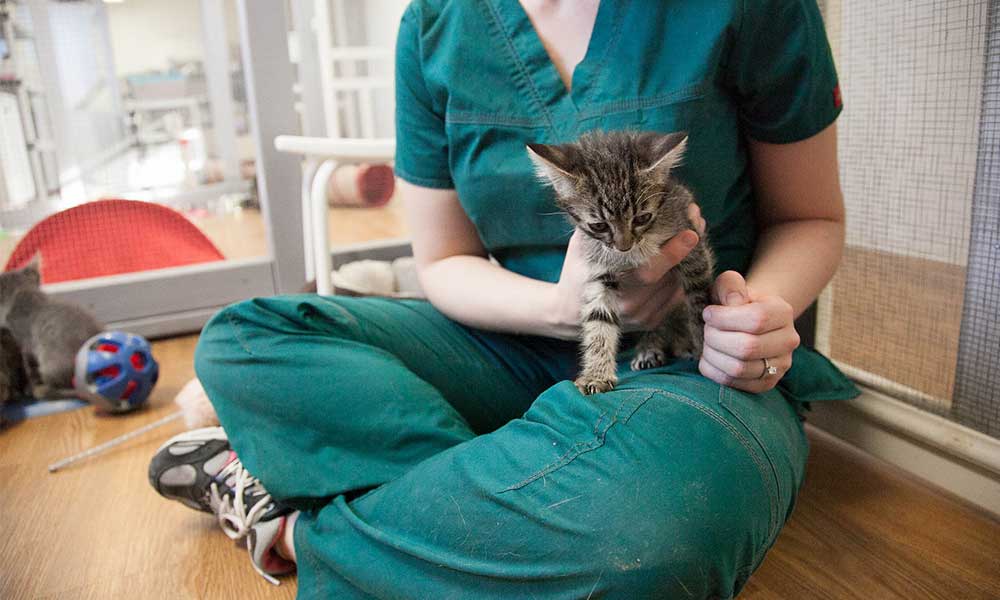
During my internship, I assisted with the care of a kitten brought in with severe infections.
Weeks later, the same family returned to show us the healthy, thriving cat it had become.
Moments like that cement why so many pursue this career.
Is This Career Right for You?
If you’re someone who:
- Loves animals but is also curious about medicine
- Thrives in fast-paced, hands-on environments
- Finds meaning in helping both pets and people
- Wants a career path that doesn’t take four to six years to begin
Then a vet tech program might be the right move.
Final Thoughts
Choosing to enter animal healthcare through a vet tech program is one of the fastest, most practical routes into the profession.
It gives you real-world skills, clinical confidence, and the flexibility to explore different animal care environments.
It’s more than just training—it’s the bridge between passion and career.
And for many of us, it’s the first step toward making a lifelong impact on animals and the families who love them.
